

A Giant Among Us: Remembering the Legacy of Bob Woodson
By Jon D. Ponder, Founder and CEO, HOPE for Prisoners
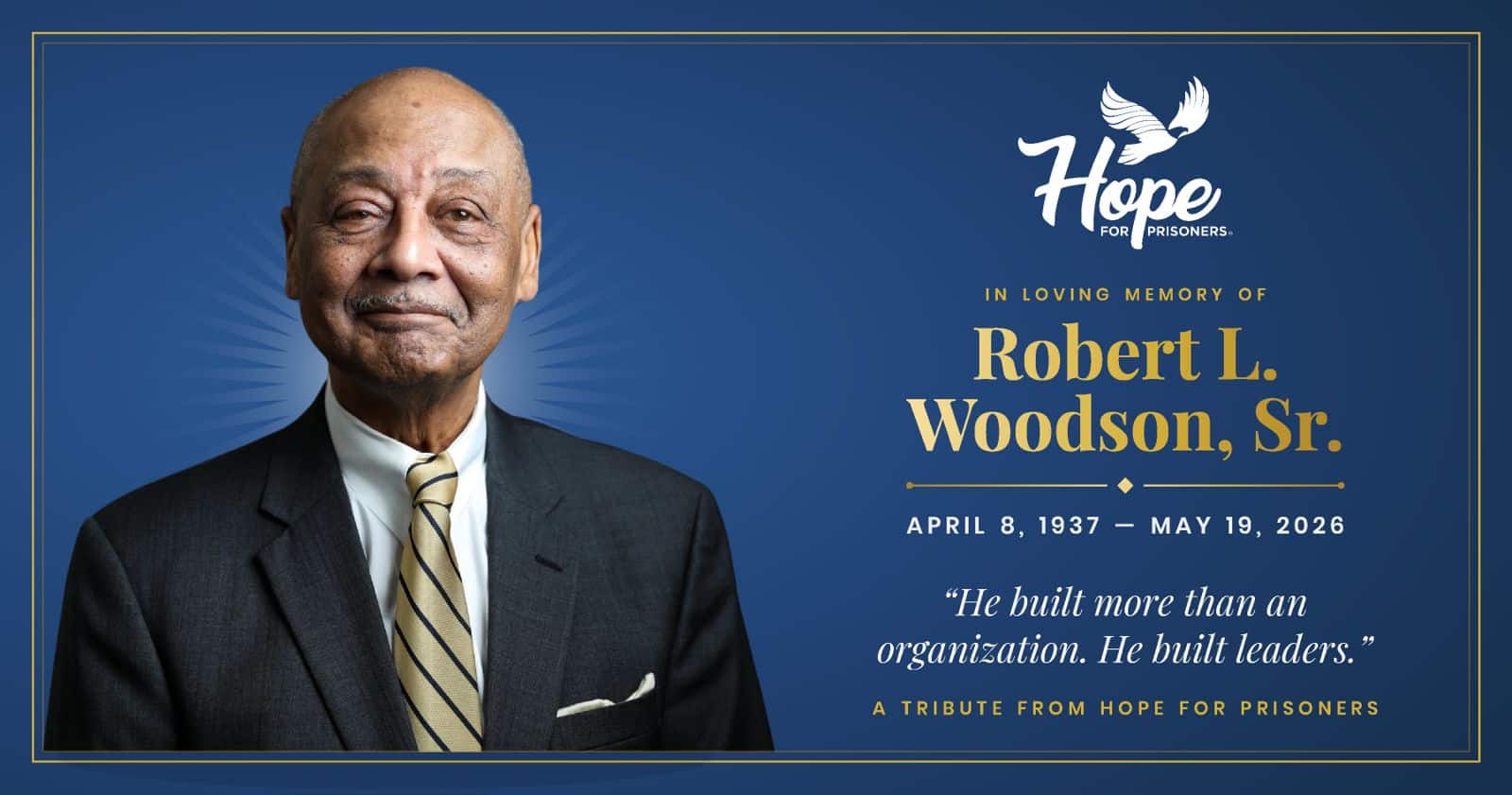
It is difficult to fully capture what Robert L. Woodson, Sr. meant to me, and to thousands of grassroots leaders across this nation whose lives were shaped by his vision, his discipline, and his unwavering belief in human potential.
To the public, Bob Woodson was a pioneering voice in the modern civil rights movement, a man who challenged conventional thinking and reshaped how we understand poverty, community, and opportunity. To those of us who knew him personally, he was far more. He was a mentor, a father figure, and, in every sense of the word, a brother.
Bob possessed a rare ability to see beyond a person’s past or present circumstances. He saw potential where others saw limitations. More importantly, he did not simply affirm that potential, he called it forth and held you accountable to it. His investment in people was intentional, personal, and transformative.
Throughout his life’s work, Bob advanced a simple but profound principle: that lasting change does not come from the top down, but from within. He believed that the individuals closest to the challenges are often the ones best equipped to solve them. This belief was not theoretical. He built an entire movement around it, one that elevated the voices and efforts of grassroots leaders working in the most underserved communities in America.
Bob often described these leaders as “antibodies” within the community. Just as the human body produces antibodies to fight disease, he believed that every community, no matter how distressed, generates its own agents of healing, individuals who rise from within to confront brokenness and restore hope. These men and women are not defined by their circumstances; they are defined by their response to them.
This perspective profoundly shaped his support for organizations like HOPE for Prisoners. Bob recognized that many of the individuals returning home from prison are uniquely positioned to lead. In his work, The Triumphs of Joseph, he lifted up those who endure hardship and emerge with purpose, men and women who, like Joseph, are tested by adversity but ultimately positioned to serve and uplift others. He saw in returning citizens that same calling, that same capacity to go back into the very places they came from and lead transformation from within.
That belief was more than philosophical; it was deeply personal. Bob stood alongside us because he understood that transformation is most powerful when it comes from those who have lived the experience. He saw value where others saw risk, and leadership where others saw labels.
While his intellectual contributions will continue to influence policy and public discourse, what I will miss most is his presence. I will miss the conversations that challenged me to think more deeply and lead more effectively. I will miss his willingness to offer correction with both clarity and compassion. And I will miss the quiet confidence that came from knowing that his counsel was only a phone call away.
Robert Woodson built more than an organization. He built leaders. He built a framework for understanding the dignity and capacity within every community. He built bridges across divides that many believed could not be crossed. And he did so with a conviction that never wavered.
His passing leaves a void that cannot be filled, but his legacy endures in the lives he shaped, the leaders he developed, and the communities he helped restore.
For me, he was more than a mentor. He was a friend who stuck closer than a brother. He showed us what it looks like to walk by faith, to serve others with humility, compassion, conviction, and love. He has truly been the hands and feet of Jesus.
Robert Woodson ran his race with purpose. His impact will be felt for generations, and for those of us privileged to walk alongside him, our lives will never be the same and his influence will never fade.